Monday, 13 July 2015

Punctuation Part 3 


 Inverted Commas or Quotation Marks.


Inverted commas are pretty straightforward on the whole.  They go around speeches and can be single: 'Yes' or double: "Yes", especially with regard to what is called the hierarchy of it.  This is another of those things publishers have preferences about.

For example, in Britain a quote within a speech would often be punctuated so:
'You said, "yesterday"?'

In the US, it would be probably be written so:
"You said, 'yesterday'?"

Note (below) how the closing quote marks come after the other punctuation except when a speech is being quoted. See below for this.

If there is a reporting clause (he said, she asked, etc) before the speech, a comma is used before it; if it comes after the speech, a period is replaced by a comma, but question marks and exclamation marks are not. Eg:

Peter smiled and said, "The weather is lovely."
"Yes. Are we going to the park?" his sister asked.
"We may," he replied.
"Great!"

Where the reporting clause comes in the middle of the speech, the first section will end with the comma and closing speech marks, even if the sentence would not normally have a comma there. Eg:
"How long," he asked, "will it take to get there?"

Note that the second section does not start with a capital letter as it is a continuation of the first part. If there were two separate sentences it would look something like this:

"I think about half an hour," she murmured. "Is that ok?"

"How long?" he gasped. "Are you sure?"

A period/full stop and a capital letter shows the end of one sentence (including the reporting clause) and the start of another.

Quotations


This is another place where American Englsih and British English differ, so you are likely to come across both ways.

In American English a final period follows the closing inverted commas of a speech:

One writer suggested that the women "go back to their traditional role of making tea at meetings.".


In British English quotes have punctuation marks outside of the speech marks. It is usual to omit a comma or period inside the inverted commas, where there is a period immediately afterwards:

One firm's motto is "Let the buyer beware".

Sometimes there may be punctuation both inside and outside the speech marks:

One question often seen is "Why does it cost so much?".

In this case, the question mark belongs to the quote, and the period belongs to the whole sentence.

If a speech continues over more than one paragraph, it is customary to put opening speech marks at the beginning of each paragraph, but only use closing speech marks when the speech actually ends.

A very long quote often has no quotation marks at all, but is shown by being indented or perhaps in a smaller or different font.


Minor uses of quotation marks:

1) for a cited word or expression:

What is the difference between a 'grant' and an 'award'?
What do you mean by 'lately'?
The phrase 'to sock it to someone' means putting it bluntly and was used as such by Mark Twain.

Italics can be used instead of "quotation marks" for this.

2) translations, paraphrases and euphemisms:
Literally 'water of life', aqua vitae must be one of the most amusing euphemisms ever invented for hard liquor.


3) 'So-called' expressions:


These are the ones trendy people have taken to making in the air with their fingers when speaking, as a kind of shorthand for actually saying "so-called",  and they work in the same way:

This slogan which originated in the 'permissive' sixties...

In the 'good old days' when my great-grandma walked miles to get to school....

It appears to be acceptable to beg if you are a 'deserving person'.

I should hate to "offend" such "victims" of course.

This use generally indicates sarcasm.


The Inverted Comma as a symbol.
The single and double inverted comma are also used singly to indicate feet and inches: 
I am 5' 1".  I know. Sad isn't it.

In American English feet aren't used of course, just inches.

Punctuation Part 2


Dotty or What?


Just like that little guy above, people can get a little confused and over generous when spreading their dots around.

Punctuation is rather like the musical score of our writing. It reflects the pauses and intonations that we use in speech. The ups and downs, the highs and lows. I expect you know what a question mark is for. Also an exclamation mark.  But what about those colons, semi-colons, ellipses?

Punctuation is really about grammar, of course. The main uses of these marks are to separate, or to enclose, words and phrases. As with commas and apostrophes, it's all about making the meaning clear.

A piece of writing with no punctuation is difficult to make sense of. You might manage, eventually, but even then you can't be sure that the way you have understood it is what the writer meant.  Try this:

Of Russian French and to some extent Ethiopian origin Peter Ustinov was born in London in 1921 and educated at Westminster School during the war he served in the Royal Sussex Regiment and the RAOC familiar to a world wide public as a brilliant playwright versatile actor director set and  costume designer he is an entertainer of wide and diversified talent.

Now try it this way:

Of Russian, French and  - to some extent - Ethiopian origin, Peter Ustinov was born in London in 1921 and educated at Westminster School. During the war he served in the Royal Sussex Regiment and the RAOC. Familiar to a world wide public as a brilliant playwright, versatile actor, director, set and costume designer, he is an entertainer of wide and diversified talent.

Punctuation makes life a whole lot easier.

It is sometimes said that the period - full stop in the UK - and the comma indicate a pause, however short, and normally that is true. But pauses can also be used in speech where no comma occurs in the writing.

As we saw in Part 1 a sentence is constructed, at its most basic, with a verb surrounded by the subject and the object of the verb.  The verb should not be separated from its subject or its object by the use of a comma.

In a long sentence it may be necessary to pause slightly between say, the subject and the verb, for emphasis perhaps, or simply to take a breath!  However, there should not be a comma there to indicate a pause. Take this sentence:

The question that does remain to be discussed concerns notions of political responsibility and ethics.

If you read that aloud you might well pause briefly after the word "discussed" but it would be wrong, grammatically, to have a comma there. This is why:

The question that does remain to be discussed (subject) concerns (verb) notions of political responsibilty and ethics (object). 

As with Part 1, I dont want to get too complicated here. I want to try to keep it simple, which means I won't go into too much detail. Learn the basics and then we can move on if necessary. We'll start with the simplest of dots, the period (US) or full stop (British).

The period or full stop.

This is used for

1) ending a sentence. 

2) to indicate an abbreviation, in names, titles, etc, though this is less common today: Mr. Mrs. etc.

3) in dates where the oblique stroke (slash or solidus) is not used:  6.7.03

4) in Britain, for separating time abbreviations: 9.30 pm
(whereas in the US a colon is generally used:      9:30 pm)

5) between units of money ($4.60)
and also between other numbers as decimal points (3.14159...)

NOTE: If a period is used for an abbreviation at the end of a sentence, use only one.

The ellipsis

Consisting of three periods in a row, and sometimes known as suspension periods, these are the subject of some debate. People have likes and dislikes about using them. However, in general, they are used to:

1) indicate where part of a quotation has been omitted. Eg:

Another alteration is: "...weep and you sleep alone."

2) indicate hesitation or suspense  Eg:

It was the world's worst nuclear accident...yet.
Charles was so...she searched about for the right word...picky!

3) show an indefinite continuation, as in the example of the decimal places above, or indicate words left unsaid at the end of a sentence:

"He's gone," she said.  "I suppose he changed his mind, unless..."  I knew what she meant.

A dash can also fulfill the second of these uses, but tends to indicate a sharper break. See Part 3.

The Question mark


These can be tricky. They are sometimes seen at the end of what is actually a comment, and not a question at all. I can only assume that this has followed the rather irritating use of speaking comments as if they were questions, rising at the end.  For example:
It is correct to use one for "What's the time?" or "You love me, don't you?" but it isn't correct to write: "This is my wife?" when introducing her, or "I'm going to lunch?" as an excuse for going out.

Anyone hearing or reading that sort of thing might reasonably ask: "Don't you know?" or "Why ask me?" Yet it is happening increasingly.

The Exclamation mark


Used for:

1) Exclamations (fairly obviously):  How lovely!

2) questions which are more like exclamations: You wouldn't!  or: Haven't you grown!

3) shock or surprise: I don't believe it! 

4) traditional wishes or curses: Happy Birthday! or: Damn you!

5) warnings or alarms: Look out! or: Go on, shoot him!

6) short sharp phrases (interjections) : Oh no! or: John! or: Hi!

They can appear inside parentheses occasionally to show the writer's surprise at what has been said:  She was even older than me (!) and extremely fat.
Used this way, it's rather like one of those surprised smiley faces.

In informal writing, they can even appear in twos and threes: The things we do for love!!
Or in combination with a question mark: Haven't you fixed that car yet?!

The Colon

Apart from being part of the bowel, a colon is two dots, one above the other ( : )

It is used to:

a) introduce examples, such as an itemised list, as you see here,

b) to introduce one example. 
I only have one child: a daughter.

c) introduce identification.
Today they face a further threat: starvation.

d) to introduce speech.
The Minister was heard to say: "We shall never give up."

e) Some other uses:
As mentioned earlier, colons are used (in the US) for the time;
they are also used to divide chapter and verse when quoting from the bible, eg:   John 3:16

In the US it can be used after the salutation in a letter, as in Dear Sir: 
In Britain a comma would be used here.

A colon can also be found in such places as: 

PS: 
Note: 
Ist Prize:

There are other minor uses but these are not really relevant here.

The semi-colon


This one takes a bit more explaining. That's because we have to get a little bit technical. I'll try to keep it simple though. Ok. Sometimes you want to say two things which are closely connected, but which aren't really part of the same sentence.   Eg:

We can't prove anything; possibly there is nothing to prove.

You could make that into two separate sentences using periods, but they would sound a little abrupt. You could also use "and" or "but" instead of the semi-colon, but which would be correct?
In situations like this, don't sweat it.  Use a semi-colon. 

Another use of the semi-colon is to separate items in a list.  You've already seen in Part 1 how commas are used to do that with words, but the semi-colons separate a list of phrases:

We sit in the car instead of walking; we use the elevator instead of the stairs;  we watch tv instead of going to the gym.

She's a wonderful mother; a great cook; a fantastic lover.

Some of the phrases, or clauses, may have commas in them already, so it would get very confusing to simply add yet more commas between the phrases. That's where the semi-colon comes into its own. Eg:

We saw a range of things laid out on scraps of plastic on the ground: Russian chocolates, curling irons, cutlery, shower nozzles, juice extractors; plus East German fishing rods, a Czechoslovak carpet, a Turkish fire extinguisher.

The semi-colon is like a comma, but more so. More than a comma, but less than a period. Think of it as the Schwarzenegger of commas. Not scary at all when you get to know it.

Sunday, 12 July 2015

 Punctuation Part 1


Commas and Apostrophes.


I'm sure you don't need me to tell you what commas are.  That's a picture of one, right?  Well, yes it is, but that isn't the kind of comma I meant.  But all writers know what commas are. They're those pesky little marks, shaped a bit like tadpoles, that you know should go somewhere but you aren't always too sure where. 

Commas are a punctuation mark.  Much poetry today doesn't use much punctuation - line breaks can take the place of commas, for example - but it's handy to know where they should go, just in case you ever need them.

This should give you some idea where to put commas and where not to put them.  I'm also going to talk about apostrophes here. They can get very lost. 

OK.  Let's start at the beginning. Commas are part of Punctuation - oh! how that word can strike terror into the hearts of some poor souls. But fear not! Help is at hand.

Let me say at this the outset, though: I'm not going to use a whole lot of fancy grammatical language here; you can buy books on grammar if you want those. I want to make it easier to understand, not harder, so I won't be airily tossing around phrases like "adverbial finite clauses" or "asyndetically co-ordinated adjectives."   Trust me. 

Punctuation.

Punctuation is all about making what we write easier for the reader to understand. It is used to avoid ambiguity or confusion. That's obvious when talking about question marks or whatever you call  the ? where you live, but some things are less simple to understand, and commas are probably the biggest bugbear.

To start with, take that much used example: Woman without her man is nothing.

That's a very ambiguous phrase; it can mean one of two things, depending on how it's punctuated:

1) Woman, without her man, is nothing.
2) Woman! Without her, man is nothing.

See my point? Two quite opposite meanings.  It's all down to where you put the commas and other punctuation. 

Right, let's move on.

Why we use commas.

Writing is composed of words separated into sentences and phrases.  A sentence almost always contains a verb, the subject of the verb, and the object of the verb. There may also be adjectives, adverbs and other stuff which you can find out about another time. 

Did you notice how I put a comma between the words adjectives and adverbs? We do that when we list things. It makes it clear that it is a list:  I went to the store and bought apples, bananas, rhubarb, potatoes, etc etc.

Also when we use more than one adjective at a time, eg: It was a still, dark, frosty  night.
Now that could be written: It was a still, dark and frosty night.
It could even say: It was a still and dark and frosty night.

So you see what's happening here. The comma, in both those instances, replaces the word and.  In that sentence above you can see there is no comma after adverbs and before and. This is a British convention (as A, B and C). In American convention it is correct use to have yet another comma before the and as well (as A, B, and C),  except in journalism where the British (A, B and C) style is more usual. 

On the whole, American convention allows for the use of many more commas than the British normally use.  This is a matter of style and, as long as your meaning is being made clear, the rules can be regarded as somewhat flexible.  Publishers sometimes have their own house rules regarding style which you would need to follow in order to be published by them.


And or but


Commas are not normally found together with the words and, but, or, especially in a short sentence:

She asked if he wanted a drink but he said no.
I need a drink and something to eat.
Are you going to bed or not?

They can occasionally be found with but, and, or however, in order to emphasise a contrast, or alternatives:
I asked her to tell the chef that I couldn't stand garlic, but that this was no reflection on his cooking.
Nothing like that had been known before, or has been repeated since.

Another use of commas is to separate  off part of a sentence:
When she was able to move, to shake herself free again, she stumbled downstairs. 

The extra, explanatory, bit in the middle is between commas because it really isn't vital to the rest of the sentence. The bits before and after it would make perfect sense without it.

There are cases where putting a comma in allows the reader to pause and take a metaphorical breath, especially if the sentence is a very long one like this, but in shorter sentences it isn't necessary and would be too fiddly.  I didn't feel a comma was necessary before that final and there, but before the but it helped to make reading easier. 

As you can see, using commas very much depends not just on making the meaning clear, but in order to help the reader slow down a little, compose their thoughts. A sentence without any breaks, even if not very long, can be difficult to read - as in the very first example I gave, under the heading Punctuation.


When not to use commas.


This is a much more difficult one to write about, as it could go on indefinitely.  However, in general, the rule goes this way:

Do not put commas where they would break up a sentence into short nonsensical phrases. Look at what you have written, take each bit between the commas separately, and ask yourself whether it makes sense on its own.

Eg:  I am going, to see my mother.

I am going - where? when? It isn't enough on its own.  Neither is: to see my mother. The whole point of that sentence is: going to see; all of those words belong together and shouldn't be separated by anything: I am going to see my mother.

I (subject) am going to see (verb) my mother (object). That is a complete sentence. Without one of those parts it wouldn't be a proper sentence and the parts can't be separated, even by a comma.

It would be different if someone asks the question: "Where are you going?" and the reply is just "To see my mother," because in informal speech we do say things like that, but it isn't good grammar.

I see many examples like this, too many to list them here, but if anyone having a problem with this takes that rule of thumb and applies it, it should improve things considerably.

Now there you see me using the comma another way, putting one between it and it. Without the comma the sentence would be confusing, even though  - strictly speaking - the sense follows on.

Again, it's about making the meaning clear to the reader. And if you don't do that, there is little point in writing.


Apostrophes.

I'm going to move on now to apostrophes, which are simpy elevated commas.  And they sometimes work in a similar way to commas, but whereas commas can replace the word and, apostrophes replace missing letters when two words are shortened to one word.


Contraction

We all use contractions like: isn't (is not) can't (can not) and so on, and we understand that the apostrophe replaces the letters we've left out (there's another one - and another!)


Possesssion

Ok, so that's one use of them. Another is to imply possession.  Possession can be described by using the word of: That man of mine, the House of Usher, but another way is to use  ('s) (an apostrophe plus the letter s) to show possession: The bag is Sarah's.  It is John's paper. And so on.

The same thing happens with plurals that are formed by a change of ending instead of using the letter s: The children's books, women's rights.

What happens though when the one doing the possessing is a plural ending with the letter s?  You might expect to do the same thing: My parents's house.

But of course we don't usuallydo that; it looks and sounds clumsy.  So we drop the final letter s  but leave the apostrophe after the first one: My parents' house, the voters' decision, two years' imprisonment.  We can use this method to say "for goodness' sake",  though here the apostrophe is often omitted altogther.

If the subject is singular but ends with the letter s we normally add es to the word instead of using an apostrophe at all, but in the case of proper names it's more usual to use an apostrophe, as in: Mrs Jones's house, Dickens's novels, though increasingly the final s is omitted here too.  There is some disagreement over this issue.

Where a name already has two s letters, it is considered rather unpronouncable to add yet another (try saying Moses's), so we get: Moses' journeys,  Jesus' teachings.  You will also see this done with ancient Greek names of more than one syllable: Socrates' death, Aristophanes' character.  It's just easier that way.

It would be correct, if a little clumsy, to use the ('s) in such phrases as: the boy in the corner's jeans, the man in the street's views, but it's probably better to rephrase something like that using of to sound less awkward: the view of the man in the street. After all, the corner doesn't have jeans. Well, not usually.  And the views of the street are not the sort under discussion.

With more than one person the ('s) is added to the second or last one:
John and Martha's wedding, my uncle and aunt's trip to Europe.

Although we use ('s) for such things as: going to the dentist's, I'll see you at Betty's, for large companies, household names,  it is usual to omit the apostrophe:  We shopped at Harrods, we went to Bloomingdales.

Plurals of Letters, etc:
We can add apostrophes to avoid confusion when making some plurals such as: Mind your P's and Q's, but where there is no confusion likely it isn't necessary: in the 1980s, the three Rs.

Its v It's. 

Now we come to the most vexed used of ('s); the one that gives most trouble. It's the word its.
It's, with an apostrophe, is always the contraction of the words it is or it has.  That is its only use.
Its, without an apostrophe, means: belonging to it. 

Now after all I've said about ('s), why in this case is it different? I'll explain.

We have these words called possessive pronouns: my, your, his, her, our, their, and the other one: it.  A pronoun is a word used instead of a name. I could say: "It is Sarah's" but instead of always using her name, I can say "It is hers." The word "her" is standing in for "Sarah" it is for, or pro, Sarah. Pro the noun, a pronoun. The possessive bit means it also tells you that something belongs to that person or thing. It's obvious really.

None of these possessive pronouns take an ('s). Let me repeat that. NONE of these take ('s).

So my becomes mine:  it is my car, becomes: the car is mine
Do the same with these:
your becomes yours, his stays as his (don't ask; it's one of those things), her becomes hers, our becomes ours, their becomes theirs,  and it - you've guessed it! It becomes its. No apostrophe. See? Easy.

Eg:  It's a sad thing when a dog loses its tail. It's even sadder when it loses its mind.

The more indefinite pronouns however, like someone, anybody, use ('s) as normal: it must be somebody's fault, it isn't anyone's fault.

Your v You're

This is another place where the apostrophe can sneak in uninvited.
Your means belonging to you: It is your right to be here.
You're is simply a contraction of You are.

The big no-noAnd the big - huge - enormous no-no is using ('s) to make a noun plural. Never, NEVER use ('s) except for a contraction, or for possession.

People selling produce may write about caulie's - it's a contraction, letters are missing -  but they should never, ever, say caulifower's, unless to say "the cauliflower's stalk" or something. The plural of cauliflower is cauliflowers. Just that.

For some glaring examples of apostrophes being misused, see:

http://www.apostrophe.fsnet.co.uk/examples.htm


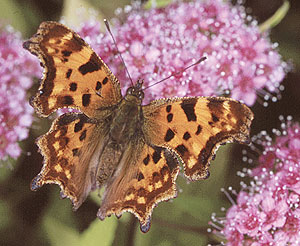
Oh, and the reason the butterfly is called a comma? It has two white marks on the undersides of its rear wings, shaped like commas. 

Friday, 8 August 2014

Some recent pieces.


Bulletins

They want to know why people are stressed
and so depressed in this modern age.
People’s lives were always tough
you took the smooth along with the rough
yet stress has mounted, year on year
so why is that? Could it be fear?
In days of yore concerns were yours
you didn’t know of far off wars,
of other nations’ trouble and strife
of some guy beating or killing his wife,
unless that guy lived very near
these were things you’d never hear.
You see what I mean? The more we learn
the more we worry, the more we burn
with deep concern
for matters we haven’t a hope in hell
of ever solving. Might as well
turn off the tv, the PC screen,
close our eyes to what might have been
and kiss the world goodbye.
Or simply sit and cry.

© August 2014


The Start of Another Day

I wake from a good night’s sleep for once
as the sunlight streams through the window,
growl hello to the cat - my mezzo soprano
is coming out basso profundo.
No energy yet to rise and shine
I submit to her feline wishes
and contemplate having to go downstairs
and deal with a sinkful of dishes.
When the caterwauling becomes intense
I turn myself onto my side
push myself up to a sitting pose
and wait for the room to subside.
I follow her to the bathroom
- she knows my habits well -
then, ablutions done, we go downstairs
to the unkempt kitchen from hell.

©  July 2014


Winnie the Pooh

At times he reminds me of Winnie the Pooh
which  may seem odd to you;
something about his shape perhaps,
the rounded tum, the flattish bum;
he’s sweet and round as a sugar plum.

And the way he walks, and his tender heart,
and his simple child-like intellect
which nonetheless is very wise.

Yes, he can be foolish, thoughtless too at times,
a bear of very little brain?
But he’s such a soft old cuddlesome thing
my sunshine through the rain.

July 2014.


Shot ( A poem of M.E.)

Imagine you’re a rag doll,
sounds funny but it’s not,
for instead of using something soft
they’ve stuffed you with lead shot.

And as you lie upon your bed
in this most parlous state
moving feels impossible:
like shifting a ton weight.

You lie there thinking what the hell
has someone done to me
when suddenly you realise
you really need to pee.

You summon up some energy,
just an ounce or two,
enough to get your body
off the bed and to the loo.

You remember having muscles
but those, it seems have gone.
And as for bones, forget it.
you may as well have none.

For me it isn’t always so,
most days I manage more.
For others it’s a way of life,
truly, I’m in awe.

© July 2014


I Want My Body Back

Someone stole my body; it’s really most remiss.
They took away the one I had, replacing it with this.
Please, I want my body back, I want my body back!

The one I had could walk for miles and running was a cinch.
This one barely moves at all, inch by painful inch.
Please, I want my body back, I want my body back!

Mine was slim and firm and lithe, it loved to dance all night.
This one’s twice the size of mine, a doughball, soft and white.
Please, I want my body back, I want my body back!

I used to have such healthy skin. I’d show it off with pride.
This substitute is spotty - a thing I can’t abide.
Please, I want my body back, I want my body back!

Just look at it: the dimpled thighs, the sagging breasts and butt,
the bingo wings, the flabby skin, the elephantine gut!
Please, I want my body back, I want my body back!

I really am not happy with the one I’m wearing now.
The former Running Deer has been replaced by Sitting Cow!
Please, I want my body back, I want my body back!

If anyone can tell me who took away my body
please let me know, I’d like it back, even if it’s shoddy.
Please, I want my body back, I want my body back!

© July 2014


Opposable Thumbs

I sing in praise of opposable thumbs
and yes I know that may sound dumb
but thumbs are so useful, thumbs are fine
and oh how I miss the use of mine.
With one of them out of action for now
life is much trickier. Thumbs, take a bow!

 June 2014


Fighting For Food

I fight with the fridge to open the door
I fight with wrapping and packets galore.
It’s all for my health and safety of course
as I break my nails and shout myself hoarse.
I don’t know who invents this stuff
that makes my life frustratingly tough.
It only adds to my dejection.
Do we need so much protection?

June 2014


Living in Second Life


Why do I live in Second Life? Cause living there is easy!
I dress with a click, don’t have to wash, and don’t get knackered or wheezy.
There I can walk and run and fly, dancing is a doddle.
Here I can barely get out of bed and walking is more of a waddle.
Want a new house? No problem mate. I’ll have it done in a jiffy.
My island is landscaped, with lake and trees, and none of them look iffy.
Here I’m a sad old so-and-so if occasionally funny.
There I’m young and fit again, in fact a bit of a honey.
So now you know, I love my lives, each for different reasons.
But I have to say it’s rather nice to be able to change the seasons!

:)

© June 2014


Too Early 


Early, too early.
No hint or tint of dawn disturbs
the eastern sky and yet
she wakes me, makes me
beg for mercy. Please
please show some pity
pretty kitty, let me sleep
today.

© May 2014


Little Tablets

Little tablets on the bedside, little tablets made of ticky tacky
little tablets, little tablets, and they all go down the same,
there’s a pink one and a green one and blue one and a yellow one
and they all come in little boxes and they all look very tame.

And the tablets in the boxes all give us some side effects
but the doctors still prescribe them and we take them just the same
And the people don’t imagine that tablets might do them harm
so they swallow all the tablets and they know they’re not to blame.

© May 2014

Thursday, 7 August 2014

Hospitals I Have Known. - Not for the squeamish.


Hospitals I Have Known.


I have been admitted to hospital a few times now with various experiences. My experiences of childbirth deserves a book of its own so I’ll ignore those for now.

My first experience involved a simple lumpectomy, a fibroadenoma. There was nothing remarkable about it. I had to contend with a stream of student doctors coming to examine the beautiful continual stitch around my areola but, apart from that, it went off without a hitch.

The next time was for a hysterectomy due to prolapse. This was a nightmare.  It was supposed to be a simple short procedure but in the event things were not so simple, they couldn’t stop the bleeding nor get the stitches to hold.  I was on the table for hours, had a blood transfusion, and was kept unconscious for three days due to the intense pain.  Also the food was inedible, really. No fibre, fish that was transparent by the time I got it having dried up totally, and so on. I became horribly constipated, for days on end, and when I finally managed after a number of pessaries and an enema, what I saw in the commode looked like something a horse would pass.  Also I couldn’t pass urine because of swelling and had to be cathererized. Added to the physical trauma was a woman in the next bed dying of what I assumed to be bowel cancer. I know she couldn’t help it but the ward smelled like a field of rotting cabbages. The nurses never came if you rang for them so people were left with bursting bladders for a very long time.  And on top of all this the ward above was being refurbished so there was constant hammering, sawing, drilling and so on which meant no sleep.

And talking of bursting bladders, which I was, when the nurses removed my catheter after about a week, they neglected to do a residual test and my bladder started to swell to bursting point.  When the doctor discovered this he exploded and had the catheter put back. By this time the pain and bad food and lack of sleep led to me walking out in my nightie, catheter bag in hand, desperate to go home.  They managed to persuade me to stay overnight, promising me that I could go home in the morning and come back in a week by which time things should have settled down.  So that’s what happened.  Unfortunately I already had ME at this stage and the whole experience left me devastated for a very long time. 

I had a short spell in another hospital for my knee to be stabilized. That wasn’t bad, I coped fine with it. And the next operation was for another tumour, this time a not so benign one, but once more I was treated with utmost care and concern. It was almost like being on holiday. A nice rest, being looked after by people who appeared to know what ME is and made sure I would be safe.

However, I recently underwent an experience in yet another hospital which was remarkable to say the least.  A question: How do you convince hospital staff who basically know nothing about ME that the sensory overload of bright lights day and night, constant noise, chattering visitors, and people in general, causes stress, which leads to adrenaline, which - in my case - sends blood pressure soaring, when all they can say is "Do you normally have high blood pressure?"

Some friends suggested I went to the GP  due to terrible lower bowel pain I’d had. 8.30 am seemed ok for getting in early. Wrong. Waiting room already full. Turns out I don't have a GP assigned to me any more so after a long wait in which I started passed out, due to orthostatic intolerance,  I saw the Nurse Practitioner about the pain and puking I’d done. He suggested I go to hospital for a scan "to be on the safe side." They ordered me a taxi, now late morning. No one asked if I needed to make any arrangements at home if I was kept it.  First mistake. I have an ageing, sick, senile cat at home, who panics if left alone and had no food out.  But I naively thought I’d be home shortly.

At the hospital they spend an age filling in forms and doing all the usual basic tests until the surgical reg came around. Having had my belly poked and pushed by a variety of people now, one more wasn't going to make much difference. He said we'd do a CAT scan to be on the safe side, considering my age. “To be on the safe side.”

He went away. Then I found myself being fitted with a drip which apparently I had to have before a CAT scan. A drip which unknown to me was to take four hours. Then the surgical reg passed by and asked me if I'd had the scan yet! NO says I.  I was by this time freezing cold, sitting in light summer clothes under the air conditioning vent.  A nurse brought me a blanket to wrap myself in and at least the small ward was fairly dimly lit and quiet.

Then they moved me up to a ward.  Bewildered now I kept telling them I shouldn’t be there.  Around 7pm I was really starting to worry about my poor cat who had now been home alone for nearly 12 hours with no food. "Never mind" I thought, "soon have the scan and home." Then they hung up another bag of saline. Another four hours would take us to 11 pm. No way they'd do the scan that night! In the morning was now the plan. One nurse even suggested I might be there for the whole weekend!

By now my blood pressure was in the 220s which put everyone in a flap. The excruciating pain from the cuff was unbelievable.  This happens to me when I get over stressed.  If I told them once I told them a dozen times.  But of course, night staff, day staff, different doctors….. The night that followed was impossible -  lights left on all night, constant beeping from drip machines, clanging and banging of new admissions coming in. No sleep, or very little. And every 3 hours the torture of blood pressure tests. Me trying to be stoic and failing miserably, nurses saying they were so sorry but they had to keep checking, and systolic staying around the 220 mark. 

During the night a very nice young house doctor bounded in, checked me all over and made the decision that this was just stress, acute hypertension, nothing to worry about. He had previously asked why I was on a drip as my creatinine levels were fine. He was so nice my pressure dropped to near normal when he did it.  But by morning I - and others- were knackered from lack of sleep and the damned torture went on. One foreign nurse thought maybe we'd get a better result on my lower leg. We didn't and it felt like my leg was breaking. I still have pain from that occasionally.

However I finally got my scan. Nothing much to see except gall stones and diverticular disease, both of which were no news to me. So it had all been for nothing, really, though it ruled out anything "nasty". Now could I please go home? Oh no, the doctor has to discharge you. When? When he gets here, he's very busy. Well could I go home, feed the cat and come back? You could but he'll be here between 1 and 2. OK, I'll wait.  2 o clock came and went. Images of a dead cat keep running through my head.  Again with the blood pressure tests, again with the pain. And still the bright lights, and then visiting time. Numbers of chatty people driving me totally insane.  I simply can’t handle it.  I kept walking out of the bay looking for somewhere quiet to get some relief but the whole ward was the same. Eventually one nurse asked me what I needed and took me to a day room I had no idea was there. 

Four o clock came. I couldn’t take any more.  I threw a total wobbly and, sobbing, started walking out with the cannula still in my arm. That got them moving. Phone calls right left and centre. Doctor  will come soonest.  Six o clock he arrived with effusive apologies, so busy today. To be fair he was so dishy, I'd have let him off almost anything. 

He listened to my explanation of stress etc and agreed it was perfectly reasonable but he had to check with his boss and then I could go. His boss was less than convinced. He might keep me in for further tests. NOOOOO.  And they might want to take out my gall bladder at some point.  I just looked at him.  By this time the pressure had dropped to 168 over 90, clearly a huge improvement at the thought of going home.  And much less painful I might add.  So after much deliberating they decided to do a ten lead ECG and if that was normal I could go home.

The ECG was fine, needless to say.   So ok, I can go HOME!

The cat was still alive, thankfully; the kitchen was a bit of a mess where she'd been hunting for food but after some tinned salmon she more or less forgave me for my unwilling neglect.  So, I don't care if my gall bladder explodes with stones flying everywhere, NEVER AGAIN!


Saturday, 10 May 2014

Poems Written From A Different Point Of View.

 Sometimes it's good to think about things in a different way, try to see things from another's point of view. Some of these are from my life, the rest - imagined. I leave you to decide which is which. 


 A Comfortable Woman

She stood there
looking at me,
her eyes warm and smiling,
her gaze caressing me.
Tall, yes, quite tall,
but no beanpole;
quite the reverse.
Her plump face,
her ample womanly body,
brought to mind
a well stuffed easy chair
strong and welcoming.
Walking towards me
she reached out and,
sinking into her embrace,
I nestled my head against
the extravagant bosom,
listened to the beat,
beat, beat of her heart;
a heart as big and generous
as the body it served.
Blanketed by her warmth,
soothed by her softness,
I was a child again,
wrapped snugly in
a down-filled comforter.


11.11. 2001


The Back of Your Neck
There's a little place on the back of your neck
just below your hair
and it seems to weave a kind of spell
whenever I kiss you there.
Is it that old black magic, love,
that sends you into a spin?
Or simply a normal reaction to
the feel of my lips on your skin?
The warmth of my breath as I linger there
and very gently blow
or the merest touch of the tip of my tongue?
I don't suppose you know.
Whatever it is I love it
and the slender curve of your neck
and the air of vulnerability
that makes me a quivering wreck.
It doesn't seem possible one little spot
seemingly so benign
could exert such power over a man
and drive him out of his mind.


Dec 2001


Ode to the Woman With Chestnut Hair.

I see you out here every day
but you never even look my way
a lovely young woman with chestnut hair
and just a hint of Titian there
sparkling eyes and a ravishing smile
you're clearly a woman born to beguile.

There's something about the way you walk
with a toss of your head as you laugh and talk
and yet there's a hint of sadness too -
tell me, is something troubling you?
Something terrible, something small?
Is there anything I can do at all?

Every day as I wait for the bus
I dream there might be a chance for us
but you pass me by as I'm waiting there
and I can only stand and stare
for I am nervous and you are bold
and you are young while I grow old.

Oh beautiful woman with chestnut hair
What will become of one so rare?
I fear you will marry some merchant banker
- I hesitate to be much franker -
who will not appreciate all your grace
oh woman with the enchanting face.

I'd love to be able to make you see
how much there is to a man like me
but for all I've learned in all my years
I haven't outgrown my boyhood fears
you'll never call me on your mobile phone
as I stand and wait for for the bus alone.

And that's as it should be I've no doubt
for youth comes in as age goes out
but possibly one day I'll receive
a look perhaps, however brief,
that says you've seen me standing there
oh beautiful girl with the chestnut hair.


© Dec 2001

Prevarication
Ah, no, she said, not this time...
You can't, she said, not now...
Stay here, she said, I'll call you
It's too late anyhow.

It's just, she said, you're busy...
I thought, she said, you'd need...
Some time, she said, to study
I want you to succeed.

Oh, right, I said, you're saying...
I see, I said, OK...
Is this, I said, for long then?
And then I thought, no way...

You've got, I said, another?
I've been, I said, replaced?
Would you, I said, have told me?
as she stood ashen-faced.

Ah, well, she said, about that...
I'll make, she said, amends...
I would, she said, have told you
And we can still be friends.

Oh no, I said, not this time.
We can't, I said, not now.
Go home, I said, don't call me.
It's really too late now.

© Dec 2001


Down But Not Out.

Regularly we assemble
and each observe
the downcast eyes
the drooping stance
of the dejected,
the shifty with their
hasty furtive glances,
a few hard stares
from the brazen
toughing it out.
Reluctantly we advance,
shuffling, hands in pockets
to sign away our dignity,
admit defeat,
but Hey! 
for a little longer
we will not starve,
our families will eat.


Dec 2001


Channel Crossing

Out in the English Channel in a small twin engined boat,
the fog, a real pea-souper, gripped us by the throat.
It came down very quickly  and left us blinded there
in one of the busiest shipping lanes just about anywhere.

We could hear the fog horns out there and the sea was getting rough
and making cocoa down below  was difficult enough
but getting it up up to the man at the helm was even more of a fight.
I swallowed the rising biliousness, but probably looked a sight.

Working on the charts below was not an easy job
and the weather forecasts didn't help - my head began to throb.
Who the heck had suggested this? I wouldn't get into a row
but whoever it was had better believe he owed me big-time now.

We'd left the Isle of Wight, you see, on a beautiful sunny day;
Cowes was full of yachstmen just waiting to sail away.
The skipper ignored the radio, which had given us the news
so here we were in a little boat, with fog instead of views.

We'd planned to visit the Channel Isles, Alderney, we'd said,
but the thought of sailing past it was filling me with dread.
We could end up in mid-Atlantic, drifting around unseen
with little food or water on board and all of us turning green.

So I plotted a course for Cherbourg (a skill of which I can boast)
right across the channel, right there on the Normandy coast.
As the skipper changed direction, following this new course,
the guy on the bow with a fog horn can was sounding pretty hoarse.

Out across the channel we went, and how that spray can sting! 
Freighters and liners were sailing past but we never saw a thing.
Just the deep sad sound of foghorns came eerily through the mist
as if we had travelled back in time to some prehistoric tryst.

How we ever made it across without being crushed or drowned
is something I'll never understand, but we made it to solid ground.
I guess it was down to providence, well that's what I choose to believe,
but if anyone ever suggests it again I'll make my excuses and leave.


Jan 2002


She

She comes to me, gently smiling
her eyes so dark and beguiling.
What manner of woman is this
whose expression suggests such bliss?
In accents quite sublime
she tells me to take my time;
holding my hand in hers
"you're doing fine," she purrs
and, with a little persuasion,
I rise to the occasion.
Soon I begin to sweat;
I'll get the hang of this yet!
No matter how hard she tries
I see it there in her eyes:
Now don't get carried away
that's quite enough for today.
I admit defeat as she grins.
The physiotherapist wins.

© 2002


Sound Association.

I went to the market yesterday
to buy myself some plums
and standing there in the marketplace
I heard the sound of drums.
Gradually the blare of brass
was added to the noise
and people stopped and people stared
to watch the marching boys.
And the uniforms and the polished boots
and the drumsticks beating time
produced a stirring in the blood
and a fever in the mind.
Step by step they marched away
till the band was heard no more
and I bought my plums and I went back home
and locked the outer door.
I stood for a while just trembling
at the memories I'd thought dead
it's amazing how the sound of drums
plays havoc with your head.
I went to the kitchen and made some tea
and I heard the radio play
and the twenty first century music
brought me back to the present day.

© Dec/2001


The Watcher
Unobserved
in the long night hours
I watch her.

Engrossed
she is unaware that
I watch her.

Moonlight
cold and clear
presents
a captivating study
in monochrome.

Hushed and still
afraid almost to breathe
I watch her.

Oblivious
she sits serene as
I watch her.

Her arms enfold
the tiny child
our child 
their eyes locked
in awe and wonder.

Proud yet humbled
my heart overflowing
I watch her.

Dec 2001


The Western Wall.


I stood before the massive blocks
of mellowed ancient stone
and spent some time regarding them
in silent contemplation.
Two thousand years have passed since first
these stones were cut and laid;
two thousand years of history -
it's something of a mystery
they stand here yet, unmoved.


These building blocks so old and golden
tell of another time.
speak to us of long ago,
of old religion, priestly robes,
the gold menorah and the ark;
of ancient laws and promises
and faith that made a nation.
And wedged into the cracks between
were countless little messages:
heartfelt prayers and supplications
left behind by pilgrims.


Others there moved rhythmically,
blackcoated, bearded, side locks bobbing,
fur trimmed hats and yarmulkes.
I stood and watched these men at prayer,
sensed the immensity - the weight -
of centuries of desolation
now stored up within these stones
and, all unbidden, shared their grief,
their overwhelming sorrow.


Jan 2002


As Hostilities Cease


I watched a man rejoice
as he returned to what was
little more than rubble
and marvelled
at the indomitable courage
which is the epitome of
the universal lust for life.


March 2002


A Memory of Jamaica

I stood alone in the shallows
on the shoreline of Jamaica.
Montego Bay as I recall
was where she'd had me take her.
On the beach some fishermen
were laughing in their boats
and I watched the shadowy shapes of rays
come swimming by, real close.
And as I stood in the turquoise sea
just soaking up the heat
dozens of tiny little fish
were nibbling at my feet.
White, they were, with yellow fins;
attractive little creatures.
It's just a memory I have
of one of the island's beaches.

© 2002.


Pennine Journey

A narrow winding road,
a drystone wall on either side,
cuts through rock-strewn velvet slopes
of purple, green and brown.

Now and then, here and there,
the woolly shape of wandering sheep
- Motorists Beware! - cause
heart-in-mouth encounters.

A lowering leaden sky lies
heavy on the hilltops while
a giant duvet, somewhat soiled,
showers us with diamond drops
to decorate the windscreen.

Higher now, and suddenly
the landscape disappears
earthbound cloud surrounds us
and all is hushed and still.

For a while the going's slow
creeping, peering as we go
headlights on and dipped.

A gradual descent and with it
virtual blindness at an end
smiles accompany relief
as unexpected sunshine
greets our gaze.


 July 2002 


Would You Mind?

If I hold your hand would you object?
If I kissed it would you mind?
When we say goodnight will you expect
a kiss of a different kind?
It's been so long since I wooed a maid
a lifetime now, it seems
it's little wonder I'm afraid
to act upon my dreams.
The wife of my youth is dead and gone
I miss her every day
for years the sun no longer shone
in any worthwhile way.
How on earth can I explain?
The day I met you here
I saw the sunshine through the rain
the mists began to clear;
overhead or in my mind
I felt a rainbow form.
Who would have thought that I could find
such shelter from the storm?
So if I'm clumsy please forgive
the awkward things I do;
there's nothing that I wouldn't give
to make you happy too.

© 2002

Wednesday, 23 April 2014

My latest poem: The Second Life Wife

Oh! the things I have done and have seen!
at times in my life I have been
a wife, a mistress, a lover,
no better at one than the other.

I was a wife for a very long time.
It wasn’t great. It wasn’t sublime.
I left when I just couldn’t take any more
my spirit had been ground down to the floor.

As a mistress was I much better?
Each visiting day was red letter.
Of course in the end he went back to his wife
but by then he’d had seven years of my life.

And then of course there was - yes.
Perhaps I should just let you guess.
For nine years her lover, or maybe her friend.
It all went horribly wrong in the end.

In between those the occasional date,
no-one I’d love, no-one I’d hate.
One wanted to marry, at first I agreed,
then realised he was not what I need.

And now - what of now? What am I today?
I lover of sorts, but so far away.
A voice with an accent, a face on a screen,
a love that traverses the miles in between.

Six years and counting. We’re both getting old
with nary a kiss or a body to hold.
But love is important in everyone’s life
so now I’m a virtual, Second Life, wife.

After all I have seen, and done, and been
a lot of memories, what do they mean?
I made my mistakes, as anyone might,
but I think I finally got it right.

© 2014